
“There are two lasting bequests we can give to our children: one is roots and the other is wings.”
HODDING CARTER
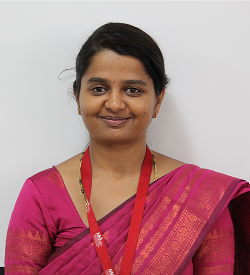
Dr. Deepa V. Kitturmath is mathematics researcher specializing in Graph Theory, having completed her Ph.D. from Karnatak University, Dharwad (2023). Her doctoral
thesis, titled “A Study on Graph Parameters and its Applications,” focuses on advanced concepts in graph invariants and their applications in theoretical and applied domains.
She has completed her M.Sc. in Mathematics from Karnatak University, Dharwad (2018) and her B.Sc. (Mathematics, Physics, Statistics) from K.L.E Society’s P.C.Jabin Science College, Hubli (2016). Her research interests include Chemical graph theory, topological indices, and graph energy contributing significantly to discrete mathematics and its interdisciplinary applications
She has an impressive research record with a total of 11 research papers which also includes 4 Scopus-indexed publications, 1 Web of Science publication, 1 Elsevier publication, 1 UGC Care-listed journal publication. She has done 11 paper presentations at national and international conferences, earning Best Paper Presentation Awards twice, highlighting the quality and impact of her work.
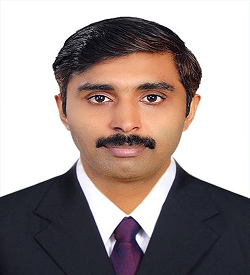
Dr. Manu Raju received his Ph.D. degree in Biomedical Image Processing from APJ Abdul Kalam Technological University, India, in 2023. He obtained his M.Tech degree in Communication Engineering and Signal Processing from Government Engineering College, Wayanad in 2013, and his B.Tech degree in Electronics and Communication Engineering from the College of Engineering Munnar (CUSAT), in 2010. He is currently working as an Assistant
Professor in the Department of Electronics and Communication Engineering at MVJ College of Engineering, Bangalore, Karnataka, India.
He has previously served as an Assistant Professor at Bannari Amman Institute of Technology, Tamil Nadu, and Government Engineering College, Wayanad, Kerala. His teaching experience spans a wide range of subjects, including Digital Communication, Artificial Intelligence, Machine Learning, Signal Processing, and Analogue Electronics. Dr. Manu Raju has published multiple research papers in reputed international journals and conferences, particularly in the area of biomedical image processing and deep learning applications for disease diagnosis.
1. Biomedical Image Processing
Biomedical Image Processing focuses on analysing and interpreting medical images such as MRI scans for disease diagnosis. Dr. Manu Raju’s research primarily targets early and accurate detection of neurological disorders like Alzheimer’s Disease using advanced computational techniques. His work involves processing high-dimensional medical imaging data to extract meaningful features for clinical decision-making.
2. Deep Learning in Medical Imaging
Deep Learning in Medical Imaging involves applying neural network architectures, particularly Convolutional Neural Networks (CNNs), to automated diagnosis and classification tasks. Dr. Manu Raju has developed several deep learning models, including 3D-CNN-based systems, for detecting and classifying Alzheimer’s Disease and other medical conditions from MRI data with improved accuracy and reliability.
3. Machine Learning for Healthcare Applications
This research area focuses on the design and application of machine learning techniques for healthcare diagnostics and predictive analysis. Dr. Manu Raju’s work integrates machine learning algorithms with medical datasets to enable early detection of diseases, classification of abnormal conditions, and enhancement of diagnostic performance.
4. Pattern Recognition and Classification
Pattern Recognition involves identifying patterns and regularities in data using computational algorithms. His research includes the classification of biomedical signals (such as ECGs) and medical images using hybrid models that combine deep learning and traditional classifiers to
improve diagnostic accuracy.
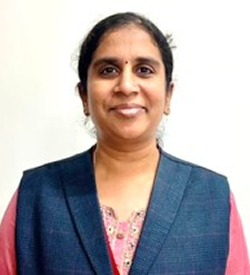
Dr. Shenbagalakshmi completed her B.E in Electronics and Communication Engineering from Government College of Engineering, Tirunelveli, Tamilnadu in the year 2013. She completed her Masters in ‘Communication systems’ from Mepco Schlenk Engineering College in the year 2015. She completed her Ph.D in ‘Machine Learning and IoT’ in 2024. The title of the Ph.D. work is ‘Feasibility study on secured Intelligent Algorithm development for the application on smart home’ She has published her papers (both M.E and PhD) in 2 Springer journal, International and National Conference journals. She is currently working at MVJ College of Engineering as an Assistant Professor with 2 years of teaching experience.
Machine Learning:
Machine learning is a field of artificial intelligence that focuses on developing algorithms capable of learning patterns from data and making predictions or decisions without explicit programming. In applications involving sensor-generated data, unsupervised learning techniques such as clustering, anomaly detection, and statistical methods are widely used to identify unusual patterns or outliers in large datasets. Models such as K-Means clustering, Isolation Forest, and Inter-Quartile Range (IQR) are commonly used to detect anomalies in time-series and environmental data. In addition, forecasting techniques such as time-series models (e.g., Prophet) are employed to analyze trends and predict future behavior, enabling
intelligent decision-making in dynamic environments.
IoT
The Internet of Things (IoT) refers to a network of interconnected devices embedded with sensors, software, and communication technologies that enable real-time data collection and exchange. IoT systems are widely used in smart environments where multiple sensors continuously monitor parameters such as temperature, humidity, gas levels, light intensity, and motion. These systems generate large volumes of real-time data, which can be analyzed to improve safety, efficiency, and automation. IoT applications are commonly found in smart homes, healthcare, industrial monitoring, and environmental surveillance, where integration with data analytics and intelligent models enhances system responsiveness and supports proactive decision-making.
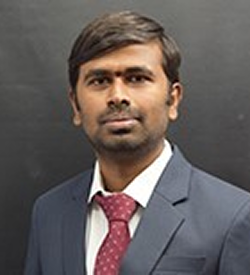
Dr. Sri Nithya Mahottamananda is an Associate Professor in the Department of Aerospace Engineering at MVJ College of Engineering (MVJCE), Bangalore. He is a highly accomplished researcher and academician specializing in rocket propulsion and advanced energetic materials.
Academic Background
Primary Areas of Research
His core technical expertise centers on expanding the performance and safety metrics of localized aerospace propulsion systems:

Dr. P. MAGESAN, received his Ph.D. (2017) from College of Engineering Guindy Campus, Anna University, Chennai, completed his M.Phil., degree (2011) from Annamalai University, Chidambaram, M.Sc., (2008) from College of Engineering Guindy Campus, Anna University, Chennai and B.Sc., (2006) from Arignar Anna Govt. Arts College, Villupuram. He has published around 26 research articles and 1 Book chapter in reputed international journals such as Nature-Scientific Report, ACS, RSC Advances, Springer and Elsevier. His research interests are nano- biomaterial synthesis for food packaging applications, nanotechnology and photocatalytic studies.
He has received few awards:
His field of research is:
Synthesis of bionanocomposite films for active food packaging applications. Bionanocomposite films are innovative materials that combine natural biopolymers with nanomaterials to enhance the mechanical, barrier, and functional properties of food packaging. These films are biodegradable, eco-friendly, and can incorporate active agents for improved food preservation. Bionanocomposite films represent a significant advancement in sustainable, functional food packaging, addressing both environmental and food preservation challenges.

Dr. Preethi G is primarily focused on materials science, with an emphasis on the synthesis, characterization, and application of nanomaterials and composites. Her work covers a range of advanced materials, particularly metal oxides and ferrites, and their photocatalytic properties for environmental applications, such as dye degradation and pollutant removal.
Key Areas of Expertise:

Dr. Budigi Lokesh specializes in materials science, focusing on the synthesis, characterization, and application of advanced metal oxide and composite materials. His research encompasses key areas such as photocatalysis, environmental remediation, and energy storage. Notable contributions include the development of zinc titanates with enhanced structural and optical properties for use in electronic devices, photocatalysis, and light harvesting. He has conducted extensive research on eco-friendly photocatalytic materials, including n-SnO₂/p-CuFe₂O₄ composites and bioinspired ZrO₂ nanoparticles, which have applications in environmental pollution control and health-related fields. Dr. Lokesh has also advanced energy storage solutions through his work on LiCoO₂/CNTs@AlF₃ composites, demonstrating improved lithium storage capabilities. Additionally, his collaborative efforts have resulted in the creation of novel materials such as Sr-hardystonite for biomedical applications and strontium orthosilicate for energy storage. His research extends to environmental risk evaluations, including water quality assessments near proposed nuclear power sites. Dr. Lokesh has published research and continues to contribute toward innovative and cost-effective solutions for global challenges in sustainability and energy.
Areas of Research Interest:

Dr. K. Arunkumar is currently working as an Associate Professor in the Department of Mechanical Engineering, MVJ College of Engineering, Bangalore. He obtained his Doctoral degree (Ph.D.) in the Faculty of Mechanical Engineering from Anna University Chennai in 2021. He has obtained his Master of Engineering degree (with Distinction) in Engineering Design (2013) and a Bachelor of Engineering degree in Mechanical Engineering (2008) from Anna University. He has obtained funds from various funding agencies such as UGC minor Research scheme (2016-2017), and TNSCST in the Academic year, 2016-2017, and 2017-2018. He has published 2 Indian patent and 1 Australian Utility patent. He has about 6 years of industrial experience in 3 Corporate sector industries and 12 years of academic experience as a Senior Assistant Professor. He is a life member of the Indian Society for Technical Education (ISTE) and The Robotic Society. He has published 20 research papers in International peer-reviewed (SCI) Journals such as Taylor and Francis, Wiley, Elsevier, Springer, SAGE, and Hindawi. He is the recognized Anna University supervisor to guide Ph. D scholars. He is a reviewer in various publications in Springer, Elsevier, Hindawi, IOP, ICE etc.
His research interests are Natural fiber hybrid composites, Advanced Machining of Hybrid Natural fiber composites, Surface Roughness, optimization, and Robotics.
Area of Research
Natural fiber hybrid composites
Natural fiber hybrid composites (NFHCs) are poised to play a significant role in the future of sustainable materials, driven by their eco-friendliness, cost-effectiveness, and lightweight properties. NFHCs are expected to find extensive applications in industries like automotive, aerospace, construction, and consumer goods, where environmental regulations and demand for green materials are intensifying. Their biodegradability and potential for end-of-life recycling further enhance their appeal in a circular economy.
Machining of Natural fiber hybrid composites
NFHCs require tailored approaches to address their unique challenges, such as fiber pull-out, delamination, and uneven tool wear caused by their heterogeneous structure. Optimizing machining parameters like cutting speed, feed rate, and tool geometry is crucial to achieve precision and minimize defects. Advanced machining techniques, such as laser cutting, ultrasonic machining, and cryogenic cooling, are being explored to enhance the performance and efficiency of NFHC processing. As NFHCs gain traction, research into machining innovations will play a critical role in realizing their full potential in high-performance applications.

Dr. Remashan Kariyadan earned his M.Tech. from the Indian Institute of Technology (IIT), Bombay and Ph.D. from the Indian Institute of Technology (IIT), Madras. Currently, he is a Professor in the Department of Electronics and communications Engineering at MVJ college of Engineering, Bangalore. He has made substantial contributions to the field of semiconductor devices, with nearly 30 papers published in reputed international journals and around 10 international conference papers.
Remashan Kariyadan has extensive international experience. He has worked at:
Remashan Kariyadan has worked on the following topics:
Research Interests:
Design, Simulation, Fabrication, Characterization and Modelling of
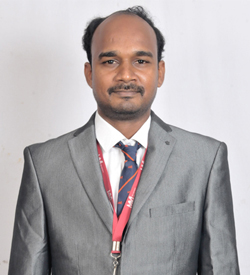
Water pollution, caused by the thoughtless disposal of chemicals, dyes, wastes, plastics and other organic pollutants, has severely affected the natural water resources, causing a significant threat to the availability of clean drinking water. Advanced Oxidation Process (AOP) uses highly reactive species to destroy pollutants by creating hydroxyl radicals in the water. As a result, most organic compounds are oxidized to less harmful chemicals. Frequently used AOPs are photolysis, photo-Fenton, and photocatalysis, which create radicals using semiconductors and light energy.
Dr. M. Prathap Kumar is an Assistant Professor in the Department of Chemistry. His research areas are Semiconductor photocatalysis and Materials Science. Dr. Prathap completed his PhD from Central Leather Institute (CSIR-CLRI), Adyar, Chennai. He has published 10 papers in reputed international journals.
Water pollution, caused by the thoughtless disposal of chemicals, dyes, wastes, plastics and other organic pollutants, has severely affected the natural water resources, causing a significant threat to the availability of clean drinking water. Advanced Oxidation Process (AOP) uses highly reactive species to destroy pollutants by creating hydroxyl radicals in the water. As a result, most organic compounds are oxidized to less harmful chemicals. Frequently used AOPs are photolysis, photo-Fenton, and photocatalysis, which create radicals using semiconductors and light energy.
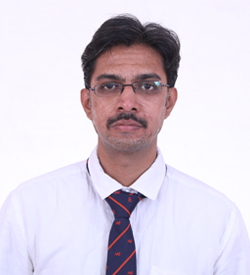
Dr. D. Bharath completed his Ph.D., Physics from VIT University, Vellore in 2014, in the field of Thermal Nonlinear optics. He completed his Master of Philosophy in physics from Annamalai University in 2010. He completed his master’s from Periyar University, Salem in 2008 with specialization Crystallography. He had a research experience in the field of Photonics, Crystal growth and Material Science. He recognised as the best researcher in 2013-14 award in VIT University during his Ph.D., He has contributed significantly to the academic community with over 10 scientific research articles published in reputed journals and served as head of the department in various colleges. He designed the analytical technique Z-scan, Optical Limiting and Second Harmonic Generation in Crystal Research Centre (Now Centre for functional material) in VIT University. He is an expert in designing optical materials and analytical techniques using LASER for photonic application. Currently, he is working in under-water optical communication and Nano optical materials.
Crystal growth for nonlinear optical materials in photonic applications is a multidisciplinary field that involves materials science, crystallography, and optics. Advances in this area contribute significantly to the development of more efficient and versatile photonic devices. Exploring new materials with enhanced nonlinear properties and incorporating nanostructures for tailored optical responses. It supports the application of frequency conversion, Phase matching and optical parametric oscillation. This is particularly important for photonic applications where the control of light is essential.
LASER (Light Amplification by Stimulated Emission of Radiation) analytical techniques utilize laser technology for various analytical applications. Designing a LASER analytical technique involves considering the specific requirements of the analysis, the type of sample being studied, and the desired level of sensitivity and precision. The research is designing the analytical technique for solid sample.
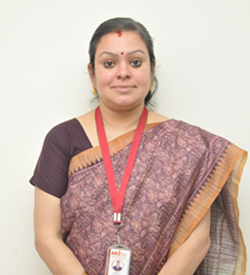
Dr. Brindha Mohan is a consummate researcher and accomplished academician, with an impressive 17-year track record in the field of Education. She did her Masters degree at College of Engineering, Guindy, Anna University. She is a Gold Medalist in her Postgraduate studies. With a Ph.D. in Networked Control System, Dr.Brindha Mohan has continuously demonstrated an exceptional expertise in curriculum development, classroom instruction and administration. Throughout her academic journey, she evinced a lot of passion and commitment that endowed on her, various leadership positions with increasing responsibilities – offices like Head of the Department, IQAC Coordinator, NAAC and NBA Coordinator and Vice Principal at MVJ College of Engineering, Bangalore.
She is certified by National Instruments as a LabVIEW Associate Developer. She has trained many faculty and students in LabVIEW. She has several papers to her credit, including Scopus and IEEE. Her research areas include Embedded Systems, Control Systems, Computer Networks, Distributed and Real time systems. She has attended a good number of FDPs, Workshops and Conferences, and organized more than 40 workshops/FDPs/Conferences.
A computer network is a network of diverse computing hardware linked through different communication technologies to share various resources. The communication links of the network can be either wired (cables) or wireless (radio waves / IR signals). The areas of research in Wireless Sensor Networks include the following:
The areas of research in Vehicular ad hoc Networks include the following:
Other areas in Wireless ad hoc Network are:
Embedded systems play a critical role in the design and implementation of practical real-world robotics and intelligent applications. The field of embedded systems focuses on how to develop fast, efficient, small, secure, reliable, and self-adaptive computing systems, covering both the hardware as well as the software aspects of the systems.
An embedded system is an application-specific computing system found inside products such as home appliances, mobile handheld personal systems, instrumentation, automobiles, aircraft, missiles, satellites, and nuclear power plants. Embedded systems are distinguished from general-purpose computing systems by their well-defined functionalities and stringent design constraints. Embedded systems encompass all the four fundamental operational capabilities required to interface with the world at large – sensing, computing, control, and communication – which can now be integrated with single-chip multiprocessors. The ability to combine operational capabilities in this way has opened new possibilities for application-specific computing.
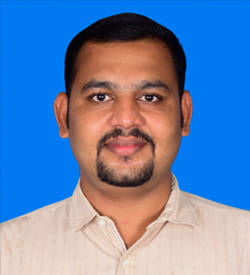
Dr. T. Daniel completed his Bachelor of Science in Physics in 2012 from V O Chidambaram College, Tamil Nadu with Distinction. He obtained his M.Sc. in Physics (2014) from Department of Physics, Manonmaniam Sundaranar University, and Ph.D. in Physics (2015-2021) from Department of Physics, Manonmaniam Sundaranar University, Tamil Nadu. Dr. Daniel’s research interests are in thin film solar photovoltaics, photo electrochemical cells, nanomaterials for energy storage and photocatalytic applications. On the other hand, Dr. T. Daniel is a recipient of the UGC- Basic Science Research Fellow (JRF & SRF) in the period 2015-2020. He has delivered talks in DST funded national seminars. Demonstrating a firm belief in interdisciplinary research, Dr. Daniel has contributed significantly to the scientific community with over 23 research articles (all are in SCI) published in esteemed journals such as Springer, Elsevier, Taylor & Francis, and Wiley. His h index is 6 and no. of citations- 116.
Thin film photovoltaics and Photoelectrochemical cells, Nanomaterials for energy storage and photocatalytic applications.
Thin films play a vital role in materials science because it has various applications in solar power harvesting, photoelectrochemical cells, sensors (IR, Bio and optical, etc). Advances in this area contribute significantly to the development of more efficient and versatile solar cells devices. Exploring new materials with enhanced photovoltaic properties and incorporating nanostructures for various sensor responses.
Nanomaterials, with their unique properties at the nanoscale, hold significant promise for developing efficient and sustainable solutions in these areas. This section of the research profile delves into the exciting world of nanomaterials and their applications in both energy storage and photocatalysis.
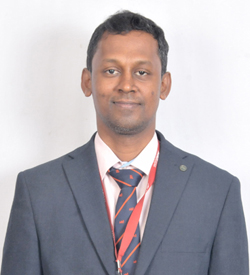
Dr. M. Thilagaraj completed his Bachelor of Engineering, with specialization in Electronics and Instrumentation Engineering,fromKamaraj College of Engineering and Technology, Madurai Kamaraj University,in 2003, with a First Class. He cleared the GATE exam in 2008. He then pursued his Masters in 2010, from GuindyCollege of Engineering – Anna University, Chennai, with specialization in Industrial Engineering, through a stipend and scholarship. He registered for his Ph.D program in 2014 at Kalasalingam Academy of Research and Education and got his doctorate, specializing in Instrumentation and Control Engineering during in 2020. The title of hisresearch thesis was ‘EEG signal classification using soft computing techniques, for epilepsy and alcoholism’. He has worked in different areas of research like Image processing, Vehicle routing problem, Signal processing and classification, Brain compute interface. He has published 18 SCI Papers in high impact factor journals. He has published all his review papers and project work in 13 Scopus Indexed journals. He is a lifetime member of ISTE. He has published 3 patents in his research areas.
‘Connecting the Unconnected’ through the world of Internet being the main goal of IOT, it has made a huge impact in today’s world. Anytime, Anywhere, Anything – IoT has captured every aspect of human life with vast scope for research as well as challenges, in the near future. As it is connected to the human environment, the major research areas can be in every field such as smart city, smart agriculture, medical field, healthcare, home automation and Industry 4.0.
A computer network is a network of diverse computing hardware linked through different communication technologies to share various resources. The communication links of the network can be either wired (cables) or wireless (radio waves / IR signals). The areas of research in Wireless Sensor Networks include the following:
The areas of research in Vehicular ad hoc Networks include the following:
Other areas in Wireless ad hoc Network are:
Signal Processing is the technique in which real-world analog signals are interpreted, using digital software and algorithms. The research area of Communications and Signal Processing is dedicated to addressing the challenges associated with the efficient processing and transmission of data. This research encompasses various sources of data, such as sound, images and sensor output signals.
Objectives of Signal Processing Applications:
The key research domains, with some examples:
Entropy is a scientific concept as well as a measurable physical property that is most associated with a state of disorder, randomness or uncertainty. It measures the degree of disorder and uncertainty in the system.
By using the Tsalis Entropy, we can study and assess the recommended EEG abnormalities through a detection approach using diverse cases, and study the classification of different EEG features and abstraction methodologies. From the features extracted with the different classifiers available, the signal can be classified by different methodologies. The various entropies available for extraction of features are Shannon entropy and Tsalis Entropy. The measure of the uncertainty of occurrence of certain EEG signals, with partial information about the system, can be analysed by using the different entropies.
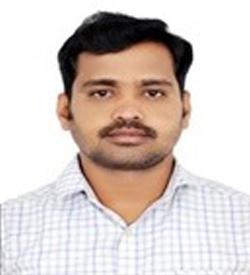
Dr. U. Naveenakumara completed his Bachelor of Science (B.Sc) in 2010, with a specialization in Physics , Mathematics, Computer science (PMCs) from Kottureshwara college, Kottur, Karanataka. He completed his Bachelor of Education (B.Ed) from T.M.A.E.Society’s College of Education, Harapanahalli, Karnataka in 2012. He completed his Master of Science (M.Sc) from Vijayanagara Sri Krishnadevaraya University (P.G Center Nandhiihalli ) in 2014, with a specialization in Mathematics. He completed his Doctorate program in 2021 at Vijayanagara Sri Krishnadevaraya University, Ballari, Karnataka, specializing in Wavelets. The title of his research thesis was ‘Wavelet Theory for Signal and Image Processing’. His research focuses on Wavelet Analysis and its Application. His work has been published in numerous prestigious journals and presented at international conferences, contributing significantly to the advancement of computational mathematics. He has worked in different areas of research like signal processing, image processing. He has published paper(s): 01 Scopus and 03 in UGC-CARE List Group II in journals.
Image Processing (IP) is a computer technology applied to images that helps us process, analyze and extract useful information from them. Advancements in image processing technology are enabling its use for increasingly widespread applications. In medical imaging, there is an increased usage of digital devices in healthcare services for the last few decades because of the advancements made in the medical field. The most appropriate method that is used for the enhancement of security and authentication of medical data is medical image watermarking, which is crucial and used for further diagnosis and reference. Medical image watermarking techniques for the protection and authentication of medical data using hybrid transforms. To develops innovative algorithms in the field of medical imageing using wavelets that is reliable and user friendly.
Deep learning is a subset of machine learning that uses artificial neural networks to learn from data. The process involves feeding a large dataset of images into the network and training it to recognize specific features. Applications of deep learning image processing include image recognition, object detection, image segmentation, and image restoration. To explore deep learning image processing and its potential to revolutionize the future of visual intelligence.
Fluid (Heat and Mass transfer) problems are of critical importance in almost all areas of engineering and technology, especially in mechanical engineering. Over several decades, engineers and scientists have been working on solving these problems by designing and optimizing components and systems needed to transfer, handle, and store thermal energy. Heat transfer problems occur in the form of highly nonlinear differential equations. Moreover, this study says that the wavelet theory will act as a tool to study fluid problems. Also, this method can apply to higher-order equations with slight modifications. This method can be treated as a domain method.
Google Scholar: https://scholar.google.com/citations?user=hj-6hSAAAAAJ&hl=en
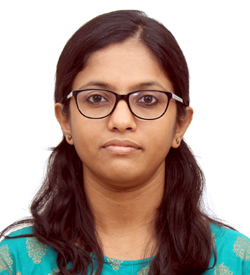
Dr. Reshmi Varma obtained M.Sc in Physics (2009) from Govt. college Madappalli (Calicut University) and Doctoral degree in physics (2011-2017) from Indian Institute of Science Education and research Thiruvananthapuram (IISERTVM). Dr. Reshmi’s PhD thesis work was on the small molecule based solar cells and application of plasmonic materials in organic solar cells. Dr. Reshmi’s research interests are in the area of Organic solar cells, Hybrid organic inorganic Perovskite solar cells, Applications of Plasmonic materials in organic electronic devices, and 2D materials, mostly looking at the physics of these systems.
Organic solar cells, a type of third-generation solar cell, utilize organic materials as light-absorbing materials. These cells have garnered significant attention due to the abundance and tunability of materials, as well as their compatibility with flexible substrates. Efficiencies of up to 17% have been achieved through improvements in device architecture, materials engineering, and solvent techniques. However, enhancing environmental stability alongside power conversion efficiency remains a key challenge. Dr. Reshmi’s research focuses on understanding the device physics to uncover efficiency-limiting factors and optimizing interfacial layers to control recombination mechanisms.
Hybrid organic-inorganic perovskite solar cells are attracting considerable interest due to their excellent photovoltaic properties. Perovskite materials exhibit high absorption coefficients, mobility, and diffusion lengths, making them promising candidates for solar cell applications. The efficiency of Perovskite solar cells has increased from 3% to 25%, but stability remains a critical issue for industrialization. Dr. Reshmi’s work aims to develop non-toxic, sustainable solar cells with high efficiency and stability. Also, Plasmonic materials will be used to enhance absorption and improve the electrical properties of perovskite solar cells.
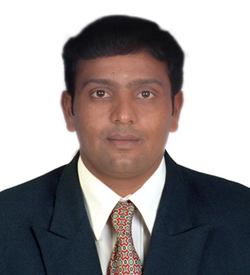
Dr. Sathish Sugumaran obtained his Doctoral of Philosophy (Ph. D) in Physics from Bharathiar University at Coimbatore. His research interests are the preparation and characterization of nano particles, thin films, composites and hybrid materials for Electronic, Opto-Electronic, Photocatalysis, Sensors and Biomedical Applications. During his doctoral research, he was awarded the prestigious National Scholarship from Jawaharlal Nehru Memorial Fund (JNMF), New Delhi. In 2008, he joined Anna University, Chennai, as a Project Assistant. In June 2014, he began working as Assistant Professor at SVS College of Engineering (affiliated to Anna University, Chennai). Subsequently, he got Post-Doctoral Fellowship (2015-2016) from the University Malaysia Perlis (UniMAP), and he joined as Post-Doctoral Researcher (2017-2018) in one of the world’s top QS Ranking University, the University of Tokyo, Japan. From 2018-2022, he worked as Assistant Professor in Physics (Contract/Guest) at the Central University of Tamil Nadu, India.
Dr. Sathish Sugumaran has received many awards and prizes like the District First Prize in Essay competition (2001), Best Poster Presentation Award (2008), JNMF Scholarship (2011-2012), Best Paper Presentation Award (2014), Excellence Award for Publications (2014-2015) and International Research Fellowships (2015 & 2017). He has published more than 40 articles in reputed International Journals (Elsevier, Royal Society of Chemistry (RSC), Wiley, Springer, Taylor & Francis, American Scientific Publishers (ASP), and Trans Tech Publications). He has to his credit, 5 Book Chapters published by International Publishers, 10 papers published as conference proceedings in books bearing ISBN, and 60 papers presented at National/International Conferences. He is currently working as Associate Professor in Physics, at MVJ College of Engineering, Bangalore.
Research Field: Materials Science and Nanotechnology
Google Scholar: https://scholar.google.com/citations?user=4o00mawAAAAJ&hl=en
Finding a new material and tuning its properties are the fascinating research in materials science and nanotechnology. Many materials are commercially introduced for the electronic and opto-electronic device fabrications for day-to-day life applications but still it demands the suitable materials with better performance for the remarkable future devices. Advanced research development is needed for the tuneable material properties via green, chemical and physical methods in order to replace the existing materials for the futuristic transparent electronic and opto-electronic devices.
The revolution in sensor research activities in instrumentation demands the advancement in the new materials and its properties in order to safeguard from toxic gas exposure to human, environment and avoid the explosion and/or other dangerous accidents. But the demand is for the suitable material for the environmental control and safety purpose in sensors devices for human health concerns. A feasible developments through flexible thin film sensor device is anticipated for the multi target detections against toxic and non-toxic gases at low level concentrations. Further, research extension to be focused onto the fabrication of plasmonic nanobiosensors and smart sensors for the early stage cancer and virus biomarker detection and remote health monitoring for medical applications.
A recent prominent research aspects to find a suitable material to preserve the human health and environment. A major concern by the researchers for the remedy for air pollution and water pollution due to its adverse effects to environment and human health. Photocatalytic technology has shown a great potential to convert the harmful organic/inorganic/gases into harmless substances through degradation and detection of dyes/heavy metal in water and gaseous pollutants in air. The percent technology demands the suitable material with remarkable properties from the plasmonic assisted photocatalytic materials to achieve the better performance than existing materials for air pollution and water pollution control systems. Further, research extension to be focussed on to plasmonic photocatalysis for the hydrogen generation.
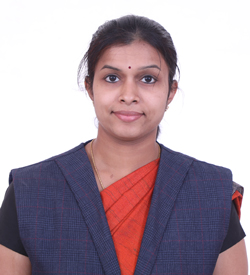
Dr. Shima Ramesh Maniyath received her B.Tech in Electronics and Communication Engineering from Govt. College of Engineering, Kannur, Kerala, in the year 2009. She completed her Masters in ‘Embedded System’ from Amrita ViswaVidyapeedam, Bangalore, in 2011. She did her Ph.D. in ‘Information Security’ in 2021, from Vellore Institute of Technology. The title of her Research thesis was ‘Robust image encryption techniques for Information Security Applications’. Her research interests include Cryptography using Artificial Intelligence, Deep learning and Machine learning technologies in Information Security and Medical Image Processing using Deep Learning Technologies. She has published her research work in 5 International and 4 National journals, and at 5 International Conference proceedings. She is currently working as an Assistant Professor in MVJ College of Engineering, Bangalore. She brings with her 12 years of teaching experience. She was awarded the ‘INSC Young Researcher Award -2023’. She became a Member (M) of IEEE in 2016, and ISTE in 2022.
Pattern recognition is an essential part of Artificial Intelligence. It is the process of classifying data based on predefined patterns or features. It involves the use of algorithms and models to identify unique patterns in data, and then use those patterns to make predictions for new data. One of the most common applications of pattern recognition is in image recognition. Pattern recognition algorithms can be used to recognize objects in images. For example, a facial recognition system can be used to identify people in photographs or videos. Other applications include speech recognition, handwriting recognition and natural language processing.
Pattern recognition can be supervised or unsupervised. In supervised learning, the algorithm is trained on labelled data, which means that the desired output is provided for each input. In unsupervised learning, however, the algorithm must identify patterns on its own, with no prior knowledge of the desired output. There are several methods used in pattern recognition, including decision trees, neural networks, support vector machines and k-nearest neighbours. Each method has its strengths and weaknesses, and the choice of a particular method depends on the nature of the data and the application.
Networking is the backbone of the interconnected world, and cybersecurity is its guardian. Advances in biotechnology have made DNA manipulation and information processing ubiquitous. It is now an essential tool in many fields, including medicine, genomics, forensics and bioengineering. DNA technology increasingly resembles information technology: DNA, like any form of information, can be read (sequenced), written (synthesized), analysed (with bioinformatics utilities), and stored (in genetic databases). However, the increasing computerization of DNA technology, and biotechnology more generally, raises new bio-cyber security concerns. Vulnerabilities that are typically associated with traditional computer systems – like the processing of untrusted input, side-channel leaks, poor authentication, falsified data, and vulnerabilities in cyber-physical systems, now exist in biotechnology.
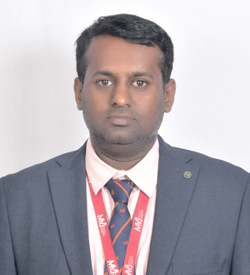
Dr. Vijaya Kumar R is the Head of the Department (HOD) of Aerospace Engineering and an Associate Professor at MVJ College of Engineering (MVJCE), Bangalore. He is an established academician and active researcher who specializes extensively in aircraft structures, computational mechanics, and aerospace manufacturing.
Academic Background
Primary Areas of Research
With over 17 years of teaching alongside more than 12 years of core research experience, his core technical contributions emphasize structural integrity and material behaviors:
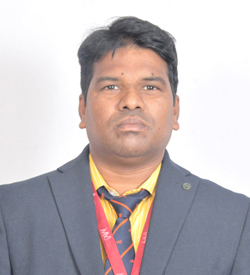
Dr. Rajesh Kumar P has a vast experience in cable mechanics and stress analysis. He has carried out research on cable bending and mechanics. His current research deals with the mathematical modeling and numerical studies of cable bending and stress analysis. Till date he has published more than 10 papers in various reputed Journals and conferences. His future research interests are to leverage his experience and guide students in cable mechanics and stress analysis. He is keen on guiding students to take up research activities on Constrained Bending Phenomenon of a Single Layered Cable Assembly and Characterization of the Stiffness of a single layered cable assembly over a sheave with internal friction.
Contact Mechanics and computational modeling have gained greater significance, especially to develop the new mathematic model to predict the cable failure to reduce the experimentations costs.
Transform your mind, your life and the world around you at MVJ. Get in touch, schedule a visit or start your admission process today.

MVJ College of Engineering, Near ITPB, Whitefield, Bangalore-560 067