ECE at MVJCE unlocks the world of satellites, communication, and digital circuits, shaping today’s and tomorrow’s technology landscape.
From semiconductors to IoT, engineers design life-enhancing technologies like mobile phones and satellite systems, connecting remote areas to the world.
With expertise in hardware and software, ECE graduates are sought after in telecommunications, robotics, and beyond, offering a dynamic and impactful career path across diverse sectors.
As Electronics and Communication Engineering encompasses research, testing, and development of electronic equipment, engineers play a pivotal role in advancing modern applications like the Internet of Things and embedded systems, making them indispensable in today’s technology-driven world.
Affiliated to Visvesvaraya Technological University (VTU)
Approved by All India Council for Technical Education (AICTE)
Bridging Innovation Electronics and Communication Engineering (ECE) integrates advanced concepts with practical applications, driving innovations in communication, automation, and digital systems.
Versatile Skill Development The Department equips students with strong foundations in both hardware and software, enabling them to work across diverse industries and adapt to emerging technologies.
Advancements in Communication ECE professionals contribute to the development of modern communication systems, supporting technologies such as video conferencing, internet streaming, and telemedicine.
Global Connectivity Infrastructure ECE engineers design, develop, and maintain critical infrastructure for television, internet, and telecommunication networks across the globe.
Diverse Career Opportunities Graduates of ECE have access to a wide range of career opportunities in telecommunications, aerospace, healthcare, research, and emerging technology sectors, both in India and abroad
. Emerging Technology Innovation ECE plays a pivotal role in advancing fields such as the Internet of Things (IoT), robotics, renewable energy, VLSI design, and wireless communication systems.
Peek into the future of an ECE degree, revealing a realm of boundless potential. Delve into pioneering research or venture into dynamic fields like telecommunications, semiconductors and aerospace. With opportunities to shape advanced communication protocols and innovate in embedded systems, ECE graduates are poised for impactful strides across diverse industries. From local enterprises to global arenas, the horizon is bright, promising a fulfilling and varied career journey ahead.
Placements at MVJCE
MVJCE’s Placement Cell links students with corpo- rates, emphasizing enhanced employability. With 250 hours of focused training during the 4-year engineering program, it refines communication, technical skills, and boosts confidence, aligning students with corporate needs.
Experienced faculty employing cutting-edge tools and technologies.
Grounding in Electronics and Communication fundamentals
Integral concepts covered: Digital communication, VLSI, wireless networks.
Focus on both hardware and software aspects: Circuits, embedded systems, programming.
Preparation for real-world problem-solving and innovation.
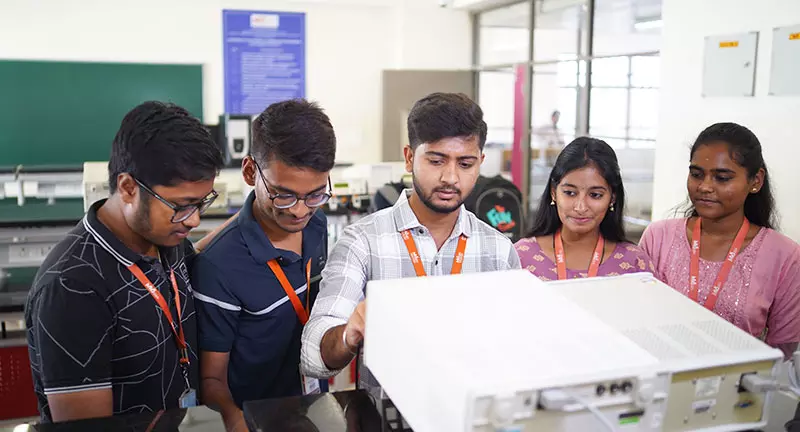
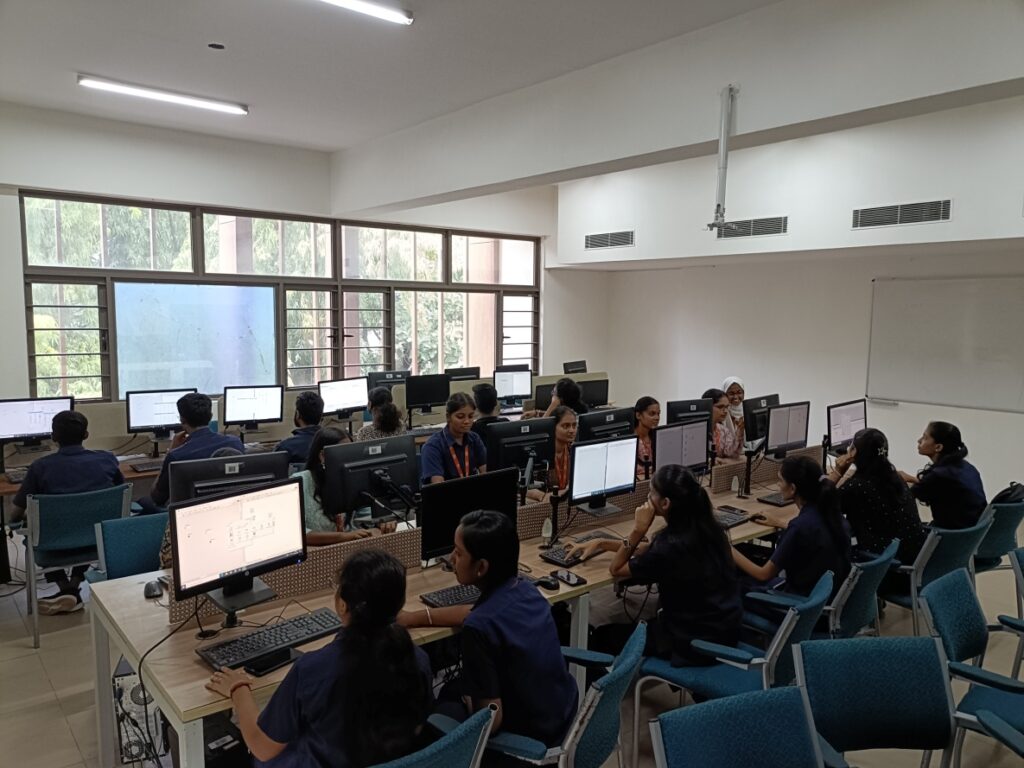
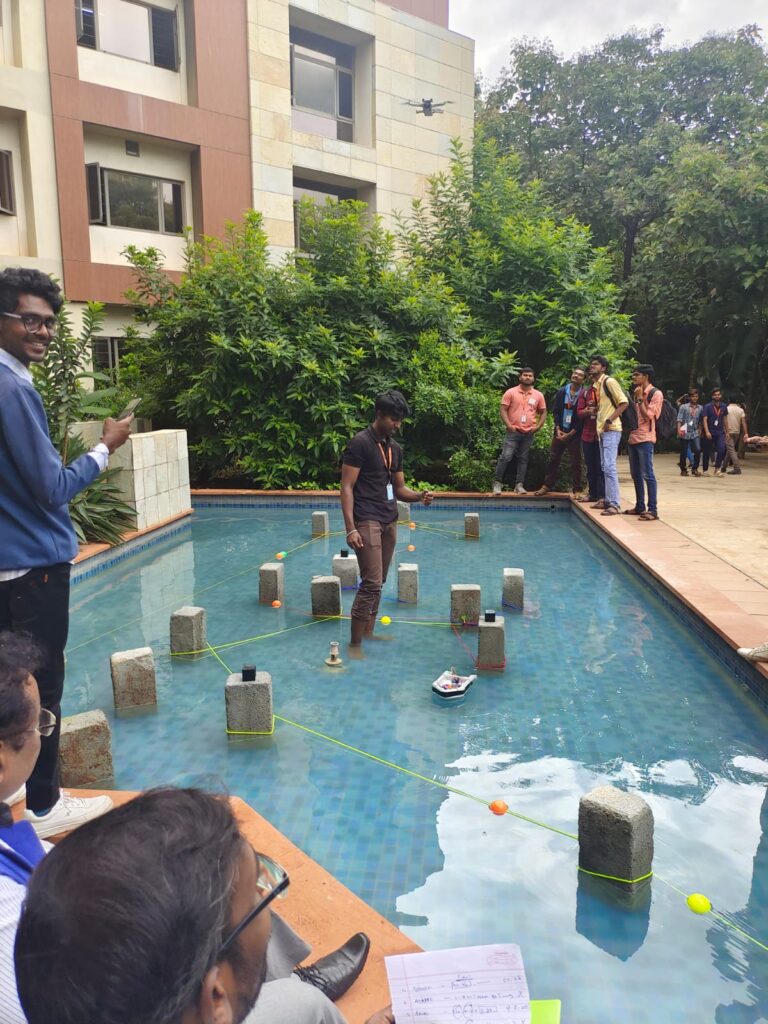
Hands-on experience with electronic devices and systems.
Emphasis on problem-solving and analytical skills.
Assisted placement opportunities with top companies.
The Curriculum
Comprehensive Curriculum
Curriculum Structure: The Electronics and Communication Engineering curriculum aligns with NEP guidelines, focusing on multidisciplinary education and student flexibility through a Choice Based Credit system. It incorporates expert suggestions from industry and academia.
Skill Enhancement: Students delve into signal processing, electronics, robotics, and communication fields through a comprehensive curriculum spanning foundational science courses, professional core subjects, internships, and elective options for specialization. Industrial training and project work enrich practical learning experiences.
An Electronics and Communications Engineer graduating from MVJCE will find smooth sailing to secure a satisfying job. The demand for Electronics and Communication Engineers is increasing exponentially, day by day. These engineers are in demand in both the Public and Private sectors. Companies from the Government sector, like ISRO, ECIL (Electronics Corporation of India Limited), BARC (Bhabha Atomic Research Centre), DRDO (Defence Research and Development Organisation), BEL, DERL (Defence Electronics and Research Laboratory), BHEL, HAL, and the Railway departments, look for engineers who have completed ECE. Major recruiters from the private sector include Intel Corporation, Samsung Electronics, Texas Instruments, Phillips Semiconductors, Hewlett-Packard (HP), IBM, Cisco Systems, and HCL Technologies.