



Best Electronics and Communication Engineering Colleges in Bangalore

MVJ College of Engineering – Excellence in Electronics & Communication

Technology never stops reshaping how we communicate, solve problems, and build new systems. Electronics and Communication Engineering sits at the centre of this transformation, driving innovations in communication systems, electronic devices, semiconductor technologies, and emerging digital solutions.

At MVJ College of Engineering, the B.E. in Electronics and Communication Engineering combines strong technical foundations with hands-on practical training. Supported by advanced laboratory infrastructure, experienced faculty, and industry interactions, the programme prepares students for careers in telecommunications, embedded systems, VLSI, IoT, robotics, and semiconductor technologies.

Affiliated to VTU, approved by AICTE, and NBA-accredited, MVJCE is recognised among the top ECE colleges in Bangalore, offering students a strong academic environment to build expertise in electronics and communication technologies.

About MVJ

Embarking on a transformative journey spanning four decades, MVJ College of Engineering has evolved into a dynamic hub of learning, blending technical excellence with character development.

The goal of MVJCE has been to create effective programmes that transform students into highly motivated graduates and postgraduates enriched with professional competence, managerial skills, innovation, and industry readiness. The curriculum is regularly updated based on the recommendations of NEP 2020, AICTE Model Curriculum, UGC, VTU, and evolving national, societal, and industry requirements.

With its strong academic legacy and commitment to engineering excellence, MVJCE continues to be a preferred choice among students exploring ECE colleges in Bangalore.

Read more about us

Explore Our Programmes

MVJCE provides innovative emerging programs in Electrical Science and Engineering to bring out future ready engineers. Explore our highly competitive engineering programs that are approved by the AICTE and affiliated to VTU!

MVJ College of Engineering

Strengths at a Glance
Dotted circle 01
Modern Campus
acre
Dotted circle 02
UG Programmes
+ 15
Dotted circle 02
PG Programmes
8
Dotted circle 02
Research Centers
9
Dotted circle 01
Successful Alumni
26000

Facilities

MVJCE provides academic and campus facilities that support focused learning, technical exploration, and overall student development.

Shaping Futures Through Cutting-Edge Engineering Education

The ECE programme at MVJCE combines academic rigour with real-world learning, helping students build both the theoretical grounding and the practical skills the electronics and communication sectors demand.  

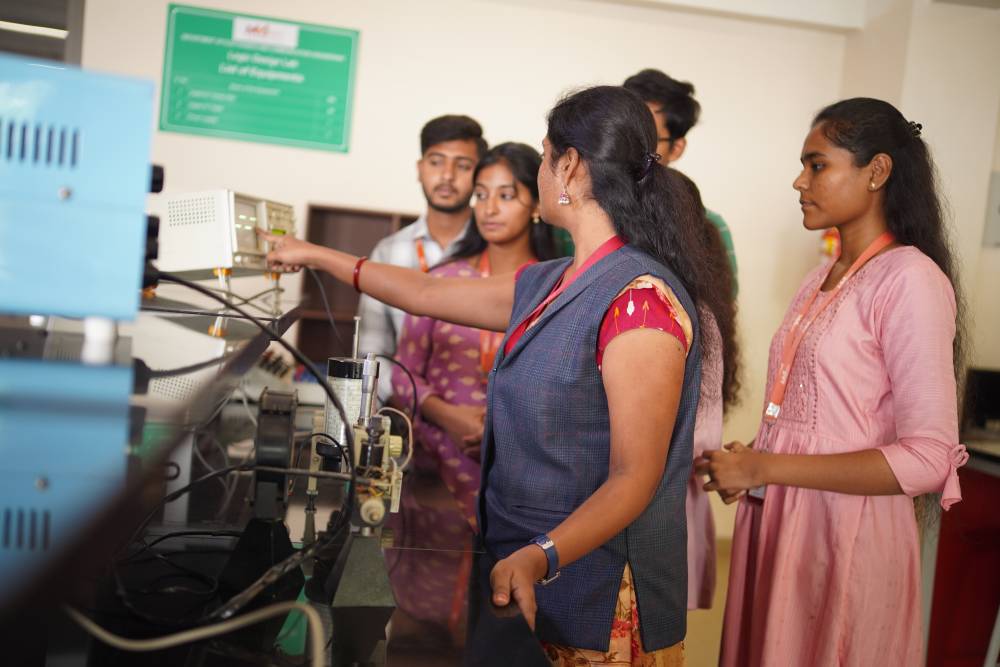
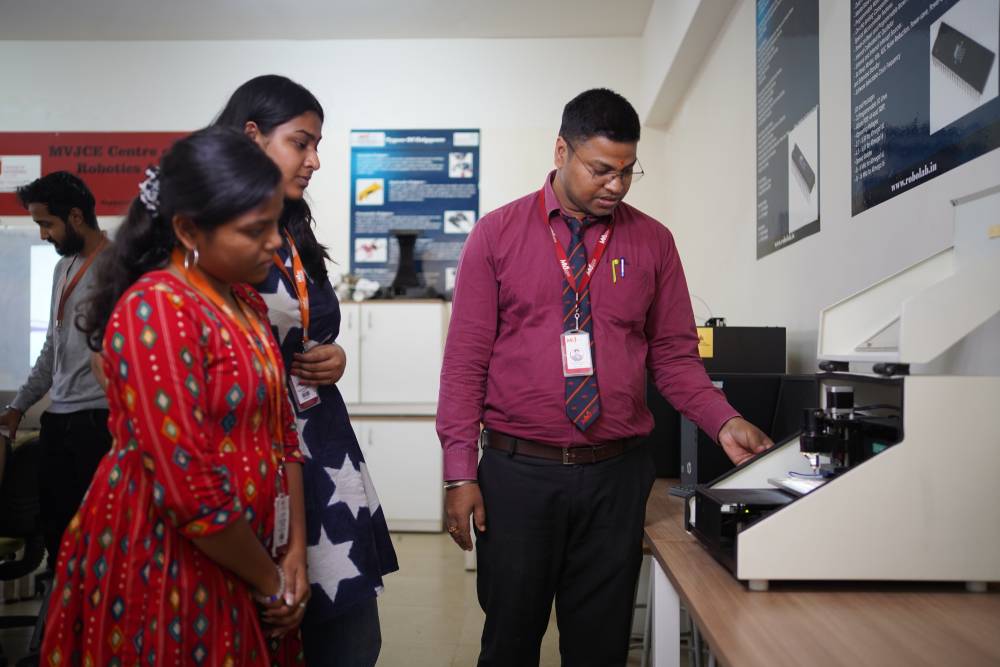
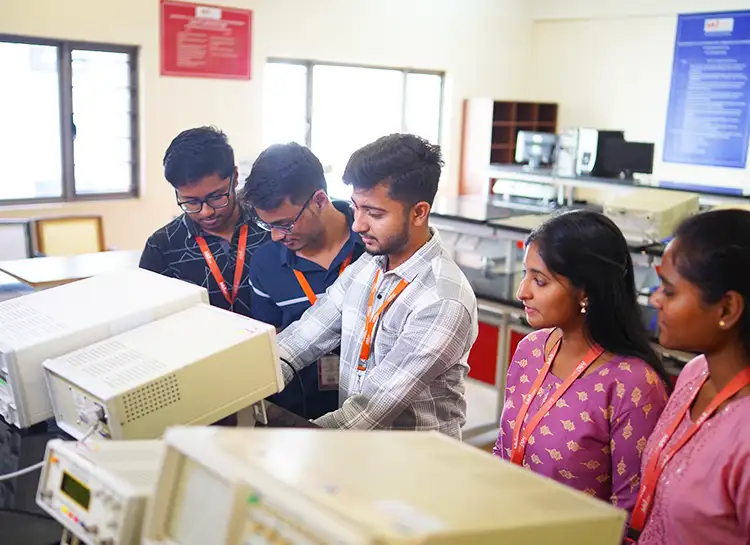
Students work in modern laboratories, take on design projects and internships, and interact with industry professionals, gaining exposure to machine learning in electronics, Internet of Things (IoT), embedded systems, VLSI Design, signal processing, wireless communication, and automation.

ECE Lab 5
ECE lab image

Beyond academics, MVJCE encourages innovation through research initiatives and interdisciplinary projects that sharpen problem-solving skills. Dedicated placement support then prepares them for roles in core electronics, communication systems, software development, semiconductor manufacturing, automation, and higher education.

With an 18-credit Honours/Minor pathway on offer, MVJCE gives ECE students more than one way to build a distinctive profile — a strong reason it ranks among the best Electronics and Communication Engineering colleges in Bangalore

Frequently Asked Questions

1. Does MVJCE offer Electronics and Communication Engineering (ECE)?

Yes. MVJ College of Engineering offers a four-year Bachelor of Engineering (B.E.) degree in Electronics and Communication Engineering. This course aims to give students a strong academic foundation and industry-orientated knowledge.

2. What will I learn in the ECE programme?

The programme covers core and advanced domains of electronics and communication engineering, including circuit design, digital systems, microprocessors, embedded systems, VLSI design, signal processing, wireless networks, and IoT. Students gain expertise through a combination of classroom instruction and practical, laboratory-based learning.

3. What specialisations does MVJCE offer in ECE?

The ECE curriculum allows students to explore advanced areas through professional and open electives. These include wireless sensor networks, 5G, optical communication, satellite communication, digital image processing, cybersecurity, and other interdisciplinary subjects. Eligible students may also pursue an Honours or Minor degree in a specialised area by completing 18 additional credits. 

4. What is the eligibility for B.E. ECE?

To be eligible for the four-year B.E. in Electronics and Communication Engineering at MVJCE, candidates must have passed 10+2 (or equivalent) with English as one of the languages studied, and Physics and Mathematics as compulsory subjects, along with Chemistry, Biotechnology, Biology, Computer Science, or Electronics.

Admissions are granted through two main routes:

  • CET (KCET) Quota: For candidates who have cleared the Karnataka Common Entrance Test, with a minimum aggregate of 45% in PCM/equivalent.
  • Management Quota: Direct admissions based on a minimum aggregate of 60% in PCM/equivalent, after clearing an entrance test such as KCET, COMEDK, JEE, or AMPCK, along with a mandatory campus interview.
5. What career opportunities are available after ECE?

Career options for ECE graduates are as follows:

  • Telecommunications Engineer
  • Embedded Systems Engineer
  • RF Engineer
  • Signal Processing Engineer
  • Control Systems Engineer
  • Power Electronics Engineer
  • ASIC/FPGA Engineer
  • Broadcast Engineer
  • Instrumentation Engineer
  • Research and Development Engineer
6. Which tools and technologies will I work with?

Students receive practical exposure to tools and platforms such as MATLAB, Multisim, Cadence, Keil, Xilinx, Synopsys, Wireshark, and NetSim. They also work with ARM microcontrollers, oscilloscopes, function generators, spectrum analysers, and other communication and electronics laboratory equipment. 

7. Does the ECE programme include projects, internships, and placements?

Yes. The curriculum integrates hands-on mini-projects, capstone projects, lab modules, industry visits, mandatory internships, technical workshops, and campus placement support. These practical learning opportunities help students develop industry-relevant skills and make MVJCE a preferred choice among students comparing the best colleges for ECE in Bangalore.

Enquire About Admissions