M.Tech Aeronautical Engineering (AE)

Curriculum

The M.Tech. in Aeronautical Engineering curriculum at MVJ College of Engineering (MVJCE) is an autonomous program, aligned with National Education Policy (NEP) directives, it blends advanced engineering theory with hands-on lab training and industrial application.

Professional Core Courses

These foundational subjects establish advanced proficiency in core flight mechanics and analysis:

  • Aerodynamics: High-level fluid flow principles over vehicle bodies.
  • Introduction to Aerospace Vehicles & Systems: Structural and operational overviews of aircraft and spacecraft.
  • Finite Element Methods (FEM): Computational structural analysis under loads.
  • Flight Mechanics: Principles of aircraft performance, trim, and static stability.
  • Aircraft Flight Dynamics: Mathematical modelling of vehicle motion.
  • Automatic Flight Control: Designing autopilot systems and flight stability augmentation.

Professional Elective Tracks

Students customize their learning through targeted electives matching specific industry demands:
  • Computational & Fluid Dynamics: Applied Computational Fluid Dynamics (CFD), Hypersonic Aerodynamics, and Theory of Combustion.
  • Structures & Materials: Theory of Elasticity, Fatigue and Fracture Mechanics, and Composite Material & Fabrication Techniques.
  • Avionics & Autonomous Systems: Avionics, Unmanned Aerial Vehicles (UAVs), and Artificial Intelligence & Robotics.
  • Propulsion & Space Systems: Aero Engine Testing & Evaluation, Space Mechanics, Rocket & Missiles, and Helicopter Dynamics.
  • Testing & Design: Flight Vehicle Design and Flight Testing.

Practical and Research Components

  • Integrated Courses: Bridging theoretical coursework with active computer-aided engineering (CAE) and software simulation labs.
  • Managerial & Research Modules: Mandatory credits in Research Methodology and Intellectual Property Rights (IPR) to train students in technical writing and patents.
  • Major Dissertation: The final semester is completely dedicated to a research-intensive thesis project, often collaborated with external labs like NAL, HAL, or DRDO.
curriculum aeronautical engineering mtech

Experiential Learning

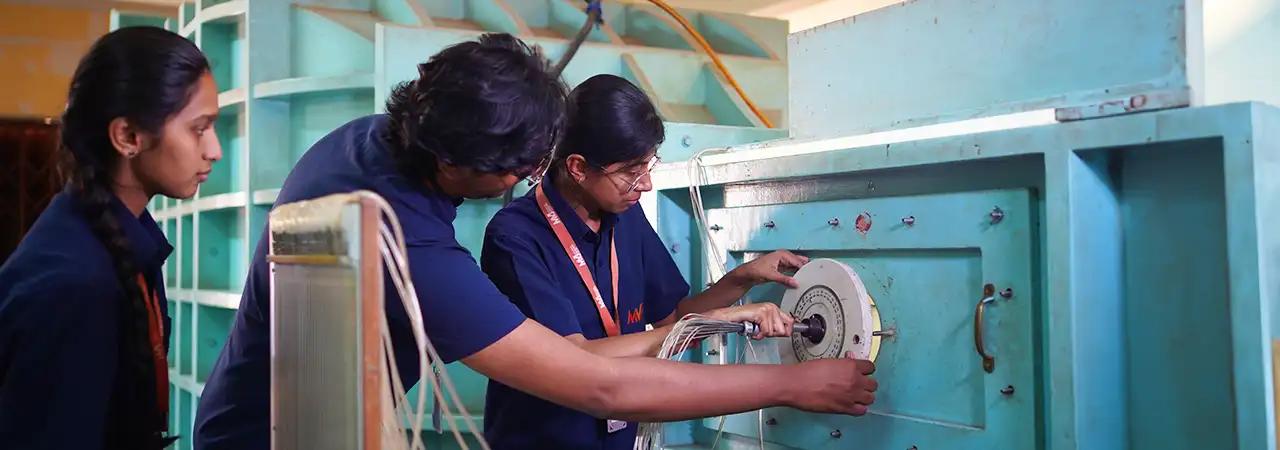
Practical learning forms an integral part of the programme through:

  • Laboratory experiments
  • Computational modelling and simulation
  • Case studies
  • Design-oriented assignments
  • Mini projects
  • Research projects
  • NPTEL learning resources
  • Industry-oriented applications

This approach enables students to apply theoretical knowledge to solve real-world aerospace engineering problems.

Outcome of the Curriculum

The curriculum has been designed to prepare graduates with strong technical knowledge, analytical thinking, computational skills, and research capabilities. It addresses emerging developments in aerodynamics, propulsion, aircraft structures, flight dynamics, computational engineering, advanced materials, unmanned aerial systems, and aerospace technologies. The programme equips graduates for careers in aerospace industries, defence organisations, research institutions, government agencies, and higher education, while supporting innovation and lifelong professional learning.

Enquire About Admissions